

SUBSCRIBE TO OUR FREE NEWSLETTER
Daily news & progressive opinion—funded by the people, not the corporations—delivered straight to your inbox.
5
#000000
#FFFFFF
To donate by check, phone, or other method, see our More Ways to Give page.
Daily news & progressive opinion—funded by the people, not the corporations—delivered straight to your inbox.
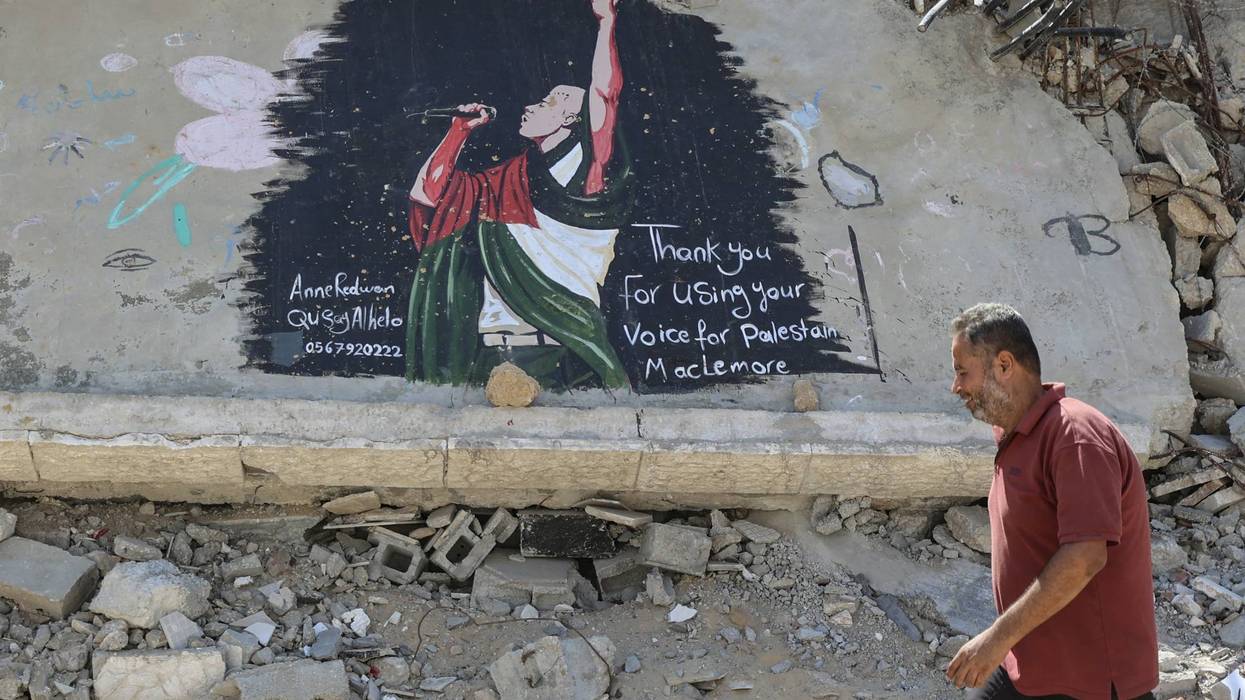
The attempt to punish Macklemore ultimately placed Robert Kraft, Ed Sheeran, and the entertainment establishment itself under unprecedented scrutiny. Far from silencing the message of Palestinian freedom, their actions amplified it.
Page Six Hollywood recently declared: “War of Open Letters Erupts Between Pro-Israel and Pro-Palestine Factions in Hollywood.” Only a few years ago, a headline like this would have seemed unthinkable.
The article described an increasingly open struggle between pro-Palestine and pro-Israel forces within the entertainment industry. On one side are artists and other industry figures taking a clear stand against Israel’s genocide in Gaza; on the other are defenders of Israel attempting to deny that genocide in the face of irrefutable evidence.
Yet even this framing failed to tell the whole story. What is unfolding is far more consequential than a quarrel among celebrities or a “war of open letters.” It is part of a brewing cultural revolution in American society—one that has now reached the highest echelons of the country’s cultural establishment. And in that struggle, Israel is losing—and losing badly.
When the pendulum swings this far, neither Kraft’s money nor the stadiums he controls can stop the movement.
Though the article acknowledged that support for Palestine has become powerful enough to divide Hollywood openly, it concealed the scale of the transformation underway by presenting the moment as a "war" between two factions.
Long before Israeli filmmakers, production companies, and actors established a significant presence in Hollywood, the industry’s cultural infrastructure routinely elevated Israel at every opportunity. Film and television constructed a glossy image of a heroic nation whose establishment and continued survival were portrayed as miraculous, while the dispossession and violence underpinning that narrative were largely erased from view.
Palestinians, Arabs, and Muslims, meanwhile, were almost invariably cast in a negative light: the uncultured and menacing "other," supposedly possessing no legitimate claim to civilization, no recognizable morality, and no history or identity worthy of serious consideration.
Indeed, Hollywood played a central role in the systematic dehumanization of Palestinians in Western popular culture. When thousands of actors, filmmakers, producers, and artists begin taking principled public stands for Palestine—often at considerable professional risk—we can therefore speak confidently of a cultural shift of historic proportions.
Susan Sarandon, Mark Ruffalo, Penélope Cruz, Javier Bardem, Joaquin Phoenix, Tilda Swinton, Olivia Colman, Emma Stone, Cynthia Nixon, and Riz Ahmed are only some of the most visible names on an ever-expanding list of morally driven and courageous artists confronting an archaic industry establishment.
The story, however, extends far beyond Hollywood. Consider the major controversy that recently erupted in the US following Macklemore’s removal from the remaining dates of Ed Sheeran’s Loop Tour.
Macklemore is far more than a pro-Palestine singer. The Grammy-winning rapper and songwriter is a gifted political storyteller whose career has combined mainstream artistic success with an enduring commitment to social causes. Since the beginning of the genocide, he has emerged as one of the most powerful voices of Palestinian solidarity in the US and beyond.
During Sheeran’s recent concerts at MetLife Stadium in New Jersey, Macklemore expressed solidarity with Palestinians in Gaza and the occupied West Bank, called for a "free Palestine," and performed "Hind’s Hall," his protest anthem honoring Hind Rajab, the Palestinian child killed by Israeli forces in Gaza.
The response to Macklemore’s courageous stand was immediate, but also predictable. The billionaires who controlled the venues reached for the weapon still at their disposal: financial power. Robert Kraft, the owner of Gillette Stadium, refused to allow Macklemore to perform there.
Sheeran, who appeared to underestimate the gravity of the moment, went on the defensive. “I am not complicit,” he declared, insisting that Macklemore’s removal had been the promoter’s decision rather than his own. But such a weak response by one of the world’s most influential musicians, particularly while an artist on his own tour was being punished for speaking out, could hardly be presented as a politically "neutral" position.
In the past, the story might have ended there. Macklemore would have been isolated and his career placed in jeopardy, while Sheeran, the promoters, and the stadium owners continued largely untouched.
Those days are gone. Global solidarity with Macklemore—and, by extension, with Palestine—spread so rapidly that the people responsible for his removal were forced to issue a succession of defensive and sometimes contradictory explanations.
By then, however, the damage had been done. Sheeran faced mounting boycott calls, protests, and even the suspension of his music by an Irish radio station. Finneas, Lukas Graham, and Aaron Rowe withdrew from the tour, while Beoga, Sheeran’s backing band, also pulled out. Artists and public figures began speaking openly about the genocide, freedom of expression, and the power of billionaires to dictate the political boundaries of art.
Podcasters and social-media commentators also mobilized, reaching audiences of millions and digging deeper into the controversy. They began asking who Kraft was, examining his longstanding relationship with Israel; his campaign against Boycott, Divestment, Sanctions; and the enormous financial machinery behind his political advocacy.
The attempt to punish Macklemore ultimately placed Kraft, Sheeran, and the entertainment establishment itself under unprecedented scrutiny. Far from silencing the message of Palestinian freedom, their actions amplified it.
Ultimately, this is not a story about two feuding artists, just as Hollywood’s transformation cannot be reduced to two camps trading open letters. Both are manifestations of a much larger cultural upheaval rooted in grassroots American society, where people from diverse backgrounds are finally opening their eyes to Israeli crimes and to the extraordinary influence Tel Aviv has long exercised over their country.
Beyond the occasional opinion poll, that story rarely makes headlines. But when the pendulum swings this far, neither Kraft’s money nor the stadiums he controls can stop the movement.
Nor can they silence Macklemore’s cry of "Free Palestine"—a cry now echoed by millions of people throughout the world.
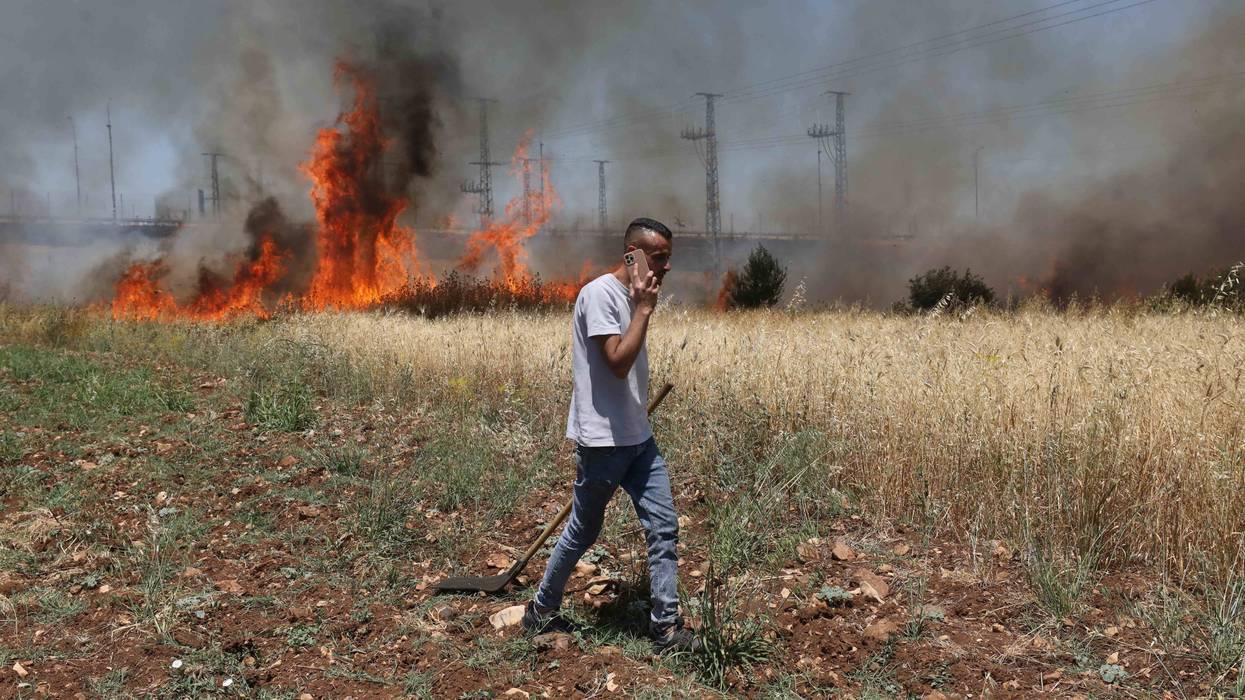
Between the handshake of 1993 and the map of 2026 lies the story of 33 years. At its heart is one question: Who controls the land—and who is still able to remain on it?
On September 13, 1993, Yasser Arafat and Yitzhak Rabin stood on the White House lawn and shook hands before the world.
For Palestinians, that image carried a larger hope: that a transitional process would lead to the end of occupation and the establishment of a Palestinian state.
The five years that were supposed to be transitional passed.
Then 20 years. Then 20.
Now, 33 years have passed.
Perhaps we do not need the thousands of pages written about Oslo to understand where we have arrived.
We only need to look at the map.
Israeli settlements have expanded. Outposts have spread across the hills. Roads connect many of them to Israel and to one another. Palestinian land has been confiscated or become increasingly difficult to reach.
East Jerusalem is increasingly surrounded by settlements. Area C, more than 60% of the West Bank, remains under extensive Israeli control over planning, construction, and land.
In Area A, which was supposed to be under Palestinian civil and security control, Israeli forces continue to enter Palestinian cities and refugee camps and carry out arrests, demolitions, and road closures.
In Jenin, Tulkarm, and Nur Shams refugee camps, more than 33,000 Palestinian refugees displaced since early 2025 remain unable to return home.
And then there is Gaza—part of the same Palestinian territory Palestinians entered Oslo believing would one day become their state.
If two states are made impossible, can anyone defend a permanent one-state reality in which Palestinians and Israelis do not enjoy equal national and political rights?
Between the handshake of 1993 and the map of 2026 lies the story of 33 years.
At its heart is one question: Who controls the land—and who is still able to remain on it?
Less than five months after Oslo was signed, Israeli settler Baruch Goldstein entered the Ibrahimi Mosque in Hebron during dawn prayers in Ramadan and opened fire on Palestinian worshippers, killing 29.
Less than two years later, Israeli extremist Yigal Amir assassinated Prime Minister Yitzhak Rabin because he opposed the political path Rabin had pursued.
The events were different, but both revealed early on the strength of the forces opposing any process that might eventually end Israel's occupation of Palestinian territory.
Negotiations continued.
So did settlement expansion.
And this became Oslo's central contradiction: Palestinians were negotiating over a state while the land on which that state was supposed to exist was changing beneath their feet.
Perhaps no place illustrates this more clearly than E1.
The area lies between occupied East Jerusalem and the Israeli settlement of Ma'ale Adumim. Its importance is not simply how many settlement homes may be built there, but what construction would do to the map.
Expansion in E1 threatens Palestinian territorial continuity between the northern and southern West Bank and further separates East Jerusalem from its Palestinian surroundings.
If the international community still speaks seriously about a Palestinian state on the 1967 borders, with East Jerusalem as its capital, where exactly is that state supposed to exist if the territory itself continues to be fragmented?
Governments can issue endless statements supporting two states.
But maps do not read statements.
They record what is built, who controls the land, and who is allowed to reach it.
The same contradiction appears in Area A.
The division of the West Bank into Areas A, B, and C was meant to be temporary. Yet what was temporary has become almost permanent, while the boundaries created by Oslo do not prevent Israeli forces from entering areas supposedly under Palestinian control.
Since early 2025, large-scale Israeli military operations have displaced more than 33,000 Palestinian refugees from Jenin, Tulkarm, and Nur Shams camps. Many remain unable to return.
For me, this is one of the most painful images of the post-Oslo era: A Palestinian refugee, whose family was displaced once before, being displaced again—this time from the refugee camp itself.
There are political arguments about Oslo, security arrangements, and who violated which agreement.
But what language describes a refugee becoming a refugee for a second time?
Settlement expansion, too, is often reduced to an image of houses appearing on a hill.
But for Palestinians living nearby, a settlement is not simply a house.
It is also a road, a checkpoint, a gate, an outpost, a field a farmer can no longer safely reach, and a grazing area a shepherd can no longer use.
During the first eight months of 2026, the United Nations documented more than 1,600 settler attacks resulting in Palestinian casualties or property damage across 275 communities.
But numbers alone do not explain what happens afterward.
Can the farmer return to his field after an attack?
Can the shepherd return to the same hill tomorrow?
Can a family continue to live where every journey to its land becomes a confrontation?
Consider Al-Mughayyir, northeast of Ramallah.
By early September, more than 56 settler attacks resulting in casualties or property damage had been documented there during 2026.
Settlement outposts have expanded around the village, while access to agricultural and grazing land has become increasingly restricted.
On September 2, two Palestinian children were shot and killed by Israeli forces there amid another period of settler attacks and military operations.
At that point, settlement expansion is no longer simply construction on a hill.
It becomes a system of pressure on a village and on the ability of its people to remain.
Then there is water.
A Palestinian farmer may legally own his land. But what does ownership mean if he cannot water it?
This question is especially acute in the Jordan Valley.
In Bardala this year, Israeli forces demolished seven agricultural greenhouses covering about 11 dunums and destroyed the water networks connected to them.
It may sound like a small incident beside the headlines of war and killing.
It is not small to a farmer waiting for water to save his crop.
If water disappears for days, he may lose a harvest. If the problem continues, he may lose his income. If access to water becomes a permanent struggle, farming itself may become impossible.
And when farming becomes impossible, a Palestinian does not simply lose a crop.
He loses one of the strongest reasons he has for remaining on his land.
This is why displacement does not always begin with a bulldozer demolishing a home.
The house may remain standing while the field goes dry, grazing land shrinks, the road closes, and attacks continue.
Eventually, a family packs its belongings and leaves.
From a distance, that departure may look voluntary.
But it did not happen in a vacuum.
And then there is Gaza.
Not because Gaza and the West Bank have experienced the same reality.
They have not.
But both were part of the Palestinian territory Palestinians entered Oslo believing would eventually become their state.
In 2005, Israel removed its settlements from Gaza and withdrew its permanent ground forces from inside the territory. While settlements disappeared from Gaza, the settlement project continued expanding in the West Bank.
After Hamas took control of Gaza in 2007, Israel imposed a severe blockade, while Egypt also maintained restrictions on the Rafah crossing.
On October 7, 2023, Hamas and other Palestinian armed groups launched a large-scale attack on Israel. Israeli civilians and soldiers were killed, and hostages were taken into Gaza.
That is a fact, and it should be stated.
But it does not tell the story of what followed.
By September 9, 2026, the reported Palestinian death toll in Gaza since October 2023 had reached 73,669, with 174,652 people reported injured, according to Gaza's Ministry of Health.
Entire neighborhoods have been devastated. Families have been displaced repeatedly. Hundreds of thousands of homes have been damaged or destroyed, alongside hospitals, schools, roads, water networks, and other essential infrastructure.
In September 2025, the United Nations Independent International Commission of Inquiry concluded that Israeli authorities and security forces had committed and were continuing to commit genocide against Palestinians in Gaza. In June 2026, the commission issued further findings concerning violations against Palestinian children and concluded that the deliberate targeting of children had resulted in acts of genocide,, crimes against humanity, and war crimes.
Israel has rejected those findings and denied committing genocide.
But Gaza does not need legal language or statistics alone to tell its story.
Ask one family a simpler question: Is there still a home to return to?
And in the West Bank, ask another: Will Palestinians still be able to remain on their land at all?
The experiences are different.
But in both places, the ability to remain has itself become a political and human question.
Put these realities on one map, and the picture becomes difficult to ignore.
In Gaza: killing, destruction, and repeated displacement.
In East Jerusalem: settlement expansion, demolitions, and displacement.
In Area C: settlements, outposts, and pressure on Palestinian communities.
In E1: a threat to territorial continuity.
In the Jordan Valley: a struggle not only over land, but over the water that determines whether people can farm and remain.
These realities are not identical.
But they lead back to the same question: Who will still be able to remain on the land?
After 33 years, it is no longer enough for governments to say they remain committed to the two-state solution.
If the world genuinely wants two states, it must protect the physical possibility of a Palestinian state now—an independent and sovereign state on the 1967 borders, with East Jerusalem as its capital.
Stopping settlement expansion, preventing displacement, protecting Palestinian land and water resources, and halting projects that destroy territorial continuity are not issues that can be postponed until another negotiation.
They determine whether there will still be something left to negotiate.
But if the international community continues to speak about two states while, on the ground, one state consolidates control over the territory between the Mediterranean Sea and the Jordan River, then another question can no longer be avoided: If two states are made impossible, can anyone defend a permanent one-state reality in which Palestinians and Israelis do not enjoy equal national and political rights?
It is not for me, or for this article, to decide on behalf of Palestinians and Israelis what the final political arrangement must look like.
But one principle should be simpler than every map and every negotiating formula: The future cannot be the permanent domination of one people by another.
Either there are two real states: Israel and an independent, sovereign Palestinian state on the 1967 borders with East Jerusalem as its capital.
Or, if the reality created on the ground makes that solution impossible, there must be one democratic state in which Palestinians and Israelis live with equal rights and equal citizenship.
The international community cannot defend the two-state solution in words, accept one-state control in practice, and reject equal rights within the reality that emerges.
In September 1993, the world watched Arafat and Rabin shake hands
The question then was: When will the Palestinian state be established?
Thirty-three years later, another question comes first: What land will remain for that state—and who will still be there to live on it?
Maps do not record intentions.
They record outcomes.
When a farmer is prevented from reaching his land, when a shepherd loses his grazing ground, when water no longer reaches a field, when a home is demolished, and when a refugee is displaced again from a refugee camp, it is not only individual lives that change.
The map changes.
That is why the question is no longer simply: Where is the Palestinian state?
It is also: Is there still enough connected land for such a state to exist—and will Palestinians still be able to remain on it?
We can disagree over the name, borders, or structure of the eventual solution.
But no permanent solution can mean one people enjoying full national and political rights while another remains under its control without the same fundamental rights.
A bombing may stop. A military raid may end. A bulldozer may leave. A checkpoint may be removed.
But if a family has lost its home, if a farmer has lost access to his land, if a crop has died because water no longer reaches it, or if a refugee has been displaced once again, the result remains visible on the map.
The land stays where it is.
What changes is who is able to remain on it.
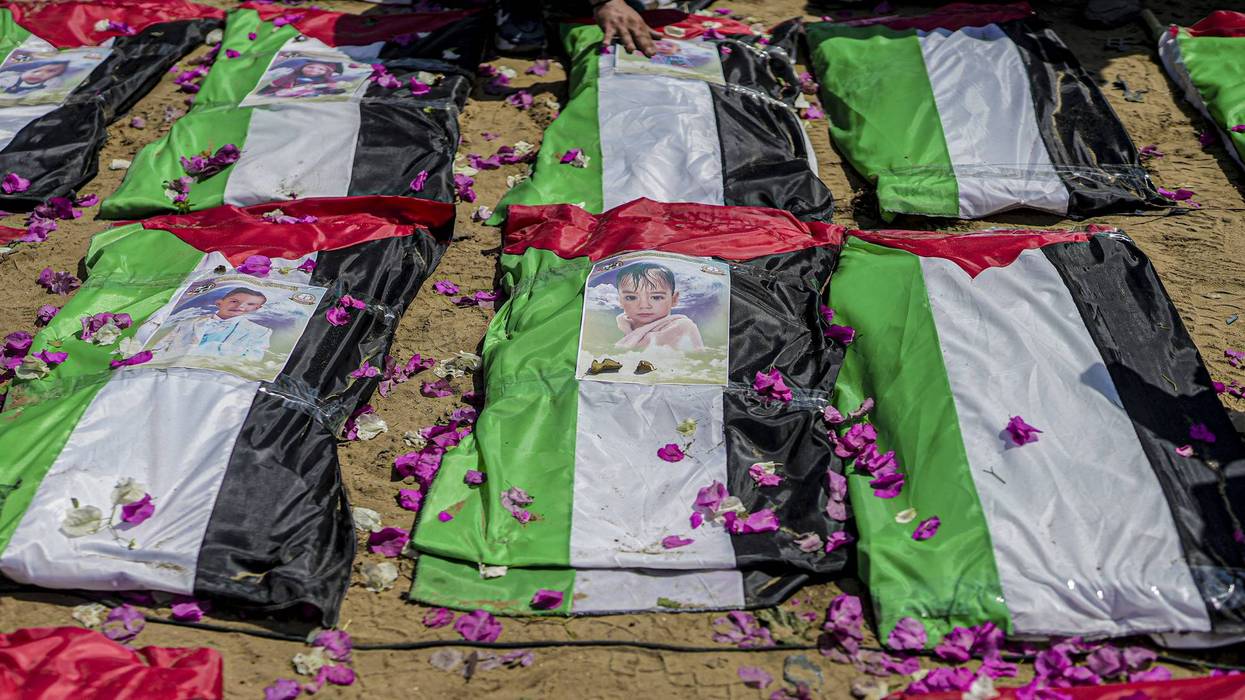
A ceasefire cannot mean peace when people are still being killed, buried under rubble, and denied the basic conditions for rebuilding their lives.
When US President Donald Trump declared in October 2025 that “the war is over,” the statement quickly became part of the international language surrounding Gaza. Headlines shifted. Political leaders began speaking about a post-war phase. The world was encouraged to look forward—to reconstruction, diplomacy, and what might come next.
But from inside Gaza, the distinction between “war” and “peace” has never been so simple. A ceasefire may reduce the intensity of bombardment. It may change the language used by politicians and diplomats. But for Palestinians who remain surrounded by destruction, displacement, deprivation, and the remains of those who were killed, the war does not simply disappear because leaders declare a new phase.
On August 4, Gaza witnessed a devastating reminder of this reality. The remains of 112 Palestinians were buried in a mass funeral in Gaza City, more than two and a half years after they were killed in an Israeli strike on the Sabra neighborhood. The victims included 37 children. Rescue workers spent weeks searching through the ruins for their remains, working with almost no equipment and identifying bodies through fragments, clothing, family testimony, and whatever personal belongings could be recovered.
For the families, the violence did not end when the bombs stopped falling on that neighborhood. It continued in the rubble. And the 112 bodies were not an isolated tragedy. Gaza's Civil Defence has estimated that around 8,000 bodies remain beneath the rubble across the strip. Recovery teams say that removing them will require heavy equipment that is still desperately lacking. Without that equipment, the dead may remain trapped for years.
A ceasefire should be the beginning of ending the violence—not an excuse to redefine its consequences as peace.
This is what it means to tell Palestinians that the war is over. For many people outside Gaza, war is measured by explosions: the number of airstrikes, the intensity of fighting, or the number of military operations reported each day. For those of us living here, war is also measured in what remains after the explosions.
It is measured in the family searching for the body of a missing relative. It is measured in children growing up among destroyed schools. It is measured in homes that no longer exist, universities reduced to ruins, hospitals struggling to function, and displaced families who cannot return to places that once defined their lives. It is measured in the enormous task of removing the dead from beneath the rubble before their families can bury them.
The language of a “post-war” Gaza therefore risks becoming another form of erasure. It suggests that the violence belongs to the past, while the consequences are treated as a humanitarian problem waiting to be solved.
But Gaza cannot simply be rebuilt like a damaged road. A society has been shattered. Families have been separated and destroyed. Communities have disappeared. Hundreds of thousands of people have lost homes. Children have lost years of education. The physical destruction is accompanied by grief that cannot be captured by reconstruction statistics. And yet, international attention has increasingly moved elsewhere.
This is perhaps the most painful part. People around the world demonstrated for Gaza. Students occupied campuses. Human rights organizations documented violations. Workers and trade unions called for solidarity. Millions of ordinary people refused to accept the destruction of an entire population as normal.
But public sympathy does not automatically produce political action. Western governments can express concern while continuing to treat Gaza as a diplomatic file rather than a human emergency. Leaders can call for peace while failing to ensure that Palestinians have the conditions necessary to live with dignity. Statements can be issued, condolences offered, and conferences held—while the consequences of the destruction remain largely the responsibility of Palestinians themselves.
This is why the words “the war is over” matter. Words shape political reality. When a government, president, or media institution describes Gaza as post-war, audiences far from the strip may assume that the emergency has passed. Attention moves elsewhere. Political pressure decreases. The suffering becomes background noise.
But the people of Gaza cannot move on simply because the world has decided to. The 112 people buried in August had already waited nearly three years for a grave. Thousands more remain beneath the rubble. Their families are still waiting. And millions of Palestinians are still trying to understand what “peace” is supposed to mean when they have nowhere safe to return to and so little ability to rebuild what was destroyed.
A ceasefire should be the beginning of ending the violence—not an excuse to redefine its consequences as peace. If the international community truly wants to speak about a post-war Gaza, it must first confront what the war has left behind. That means guaranteeing sustained humanitarian access; enabling the removal and identification of those buried beneath the rubble; supporting the rebuilding of homes, schools, hospitals, and universities; and establishing meaningful accountability for violations of international law.
Most importantly, Palestinians must not be treated merely as recipients of humanitarian assistance. They must be recognized as people with rights, agency, and a future that belongs to them. The world may want to turn the page on Gaza. We cannot. We are still living in the pages that came before.
For those of us here, the war is not an entry in a history book. It is the rubble outside our doors, the empty chair at the family table, the child who cannot return to school, and the grave that took years to become possible. So when the world is told that the war is over, listen to Gaza.
Look beneath the rubble.
Count the graves.
And ask whether peace can truly be declared while thousands of the dead are still waiting to be found.
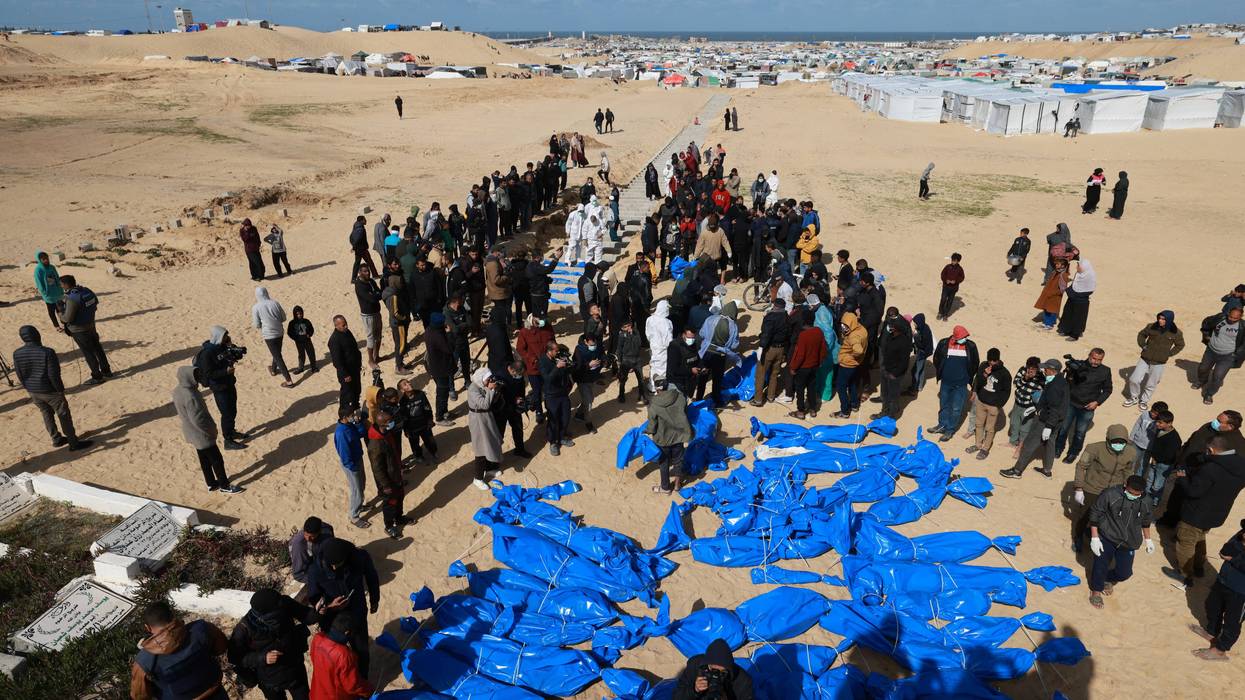
Recovering the dead has become a final test of human dignity
In every war, there is supposed to come a moment when the guns fall silent and families carry their dead to the cemetery.
In Gaza, that moment has still not fully arrived.
Nearly three years into the war, thousands of Palestinian families are still waiting—not to learn whether their loved ones survived, but for the chance to recover what remains of them from beneath collapsed homes and buried streets.
Many families know almost exactly where their relatives are: beneath a particular building, under a collapsed staircase, behind layers of concrete too heavy to move by hand. Across Gaza, rubble is no longer only evidence of destruction. In many places, it is also a grave.
There should be no disagreement over one principle: The dead have a right to be recovered and buried with dignity, and families have a right to know where their loved ones lie.
The urgent humanitarian question is therefore not only how many people were killed. It is how many are still waiting to be recovered, identified, and buried.
On August 4, 2026, Gaza held a mass funeral for 112 members of the al-Hassayna and Abu Sharia extended family. Their remains had been recovered from homes destroyed in Gaza City’s Sabra neighborhood in November 2023. For nearly three years, their families had waited to bury them.
That funeral was a warning about what time does to the dead—and to those left behind.
The longer remains stay beneath collapsed buildings, the harder identification becomes. Decomposition advances. Bones separate. Personal belongings are displaced. Forensic evidence deteriorates. Gaza’s forensic capacity also remains severely limited.
For families, identification is not a technical detail. It is the difference between a missing person and a known grave. It is the ability to perform a funeral, visit a burial place, and begin mourning with certainty rather than suspicion.
For relatives, the waiting is its own form of suffering. Some families return again and again to the same ruins, pointing to the place where a bedroom, kitchen, or stairwell once stood. They are not asking for certainty about survival; they are asking for the basic certainty of a grave. Until recovery happens, mourning is suspended between memory and rubble.
There are legal consequences as well. Without formal recovery and identification, families can face prolonged uncertainty over death registration, inheritance, guardianship, and other civil matters. A person may be gone in every human sense and still remain unresolved on paper.
The physical challenge is enormous. A 2026 damage and needs assessment by the United Nations, the European Union, and the World Bank estimated that the war had generated more than 68 million metric tons of rubble in Gaza. Some debris are contaminated by unexploded ordnance, asbestos, and other hazardous materials.
Recovering the dead is therefore not a matter of sending people into ruins with shovels. It requires excavators, cranes, fuel, protective equipment, forensic teams, DNA identification capacity, safe humanitarian access, and protection for civil-defense and rescue workers.
Heavy machinery is not a luxury. It is the difference between a body remaining beneath concrete and a family finally being able to bury its dead.
In July 2026, the United Nations Development Programme and the European Union launched a €15 million initiative to support emergency debris removal and strengthen Gaza’s capacity for the dignified recovery and identification of human remains. It is important, but the need is far greater than any single project.
That is why debris removal must treat the recovery of human remains as a central humanitarian priority, not as an afterthought to reconstruction. Sites where people are believed to be buried should be mapped and handled carefully, with procedures for documenting remains, preserving evidence, and notifying families. Rebuilding Gaza cannot mean building over the missing.
What is required now is neither complicated nor impossible.
Humanitarian teams need safe and unhindered access to recovery sites. Excavators, cranes, fuel, spare parts, and specialized equipment must be allowed in without delay. Forensic capacity must be expanded, including DNA identification and proper preservation of remains. Civil-defense, rescue, forensic, and humanitarian teams must be protected.
These are not maximalist political demands. They are the minimum requirements of human dignity.
People will continue to disagree about politics and the future of this conflict. But there should be no disagreement over one principle: The dead have a right to be recovered and buried with dignity, and families have a right to know where their loved ones lie.
A bulldozer should not become a diplomatic bargaining chip. A crane should not require a political breakthrough. Reaching the body of a child should not become another battle.
Civilization is measured not only by what it builds for the living, but by the dignity it preserves for the dead.
Open the crossings and humanitarian routes. Allow the heavy machinery and forensic equipment in. Protect the teams recovering the dead. Give families the chance to bury their loved ones.
Because even after war has taken a life, it should not be allowed to take away a name, a grave, and a final goodbye.
Human dignity does not end with death.
Let Gaza bury its dead.

A recent lawsuit where parents at Palo Alto Unified School District sued over a field trip to a mosque is one of the latest manifestations of the policing of California public schools over how Palestine is or is not taught.
As Jewish-Arab American, I feel the responsibility to work to overturn the dominating narratives that divide my people. I can see clearly the manufactured ill will that has fueled ignorance and the murder of ten of thousands of Palestinians and stripping of the survivors’ dignity. Misinformation about Islam and the silencing of Arab voices are shadows on the wall, distracting us from a deeper truth: that we share a common humanity, and that the best of our cultures and faiths calls us toward kindness, forgiveness, and humility, even as public attention so often fixates on separation.
California has seen a sustained campaign by pro-Israel advocacy organizations to reshape how Palestine is taught—or not taught—in public schools through a plethora of bills aimed to censor ethnic studies, and a recent lawsuit where parents at Palo Alto Unified School District sued over a field trip to a mosque is one of the latest manifestations of the policing of public schools. The lawsuit sparked serious debate on the discretion afforded to public educators in developing course content.
Claims made include that students were encouraged to wear hijabs, that other houses of worship were not included in the class plans, and that students were exposed to a speaker they deemed controversial, Zahra Billoo.
Whatever one’s personal views are on these topics, let’s ground back to facts: A field trip to a mosque isn’t illegal. Lawsuits are often made even in cases where the plaintiff is aware the law wasn’t broken, but the lawsuit itself can be used as a tactic of intimidation and to mobilize negative press attention toward the defendants, as is the case here.
This lawsuit is motivated by a desire to intimidate schools away from exposing students to Islam and speakers who represent the opposite of Israeli propaganda.
Starting with the claim regarding hijabs: Is it illegal to encourage a student to wear the proper attire to enter a space of worship that is optional to enter in the first place? I don’t think so.
Next, a main claim was that “the mosque was the only house of worship included in the program, according to the lawsuit,” as Jweekly put it. This one caused me to pause.
Should you be allowed to take students to a house of worship? If so, then where would we be able to draw the line?
There are hundreds of religions out there. Classes would be going to houses of worship everyday in order to meet the proposed standards. Does it have to be all or nothing? Surely students could be allowed to visit one or two houses of worship without visiting them all, as it would be impossible to determine a reasonable legal standard for this.
I think defining the purpose of the class in question is also very important here. If the purpose of the class is to expose students to minorities, which would be characteristic of a class called “Social Justice Pathway,” it is true that Muslims are minorities in this country. Islamophobia is ironically being triggered online in the responses to this incident.
The Council on American-Islamic Relations is a legal advocacy organization for Muslims. CAIR supports Muslims whose civil rights are directly targeted. It is appropriate to have a representative of that organization address a class focused on social justice. Muslims are materially being denied access and rights based on their religion and identity in the United States. With the other Abrahamic religions being dominant and widely represented, I would assert that Islam is the least represented of the Abrahamic religions in the US and is deserving of students getting a chance to experience it firsthand.
Recent national polling suggests that Muslim Americans experience religious discrimination at higher rates than any other faith group surveyed, including in consequential areas such as employment, housing, banking, healthcare, travel, education, immigration, and interactions with law enforcement.
Another thing that bothered me (but didn’t shock me) about this lawsuit is that it assumes students shouldn’t be exposed to “controversial” speakers. It is hardly illegal for students to hear controversial speakers in school. In fact, a balanced education relies on freedom of ideas and information rather than censorship. Even if a parent finds some of Billoo's statements deeply objectionable, does that mean high school students cannot hear her speak?
Zahra is a staunch supporter of Palestinian rights, and it is convenient for Zionist groups to label her as antisemitic. Articles portraying her as antisemitic rely on the conflation of Judaism and Zionism. Zahra is a supporter of Jewish Voice for Peace and If Not Now, which are composed of Jewish people who refuse to allow Israeli nationalist propaganda to define what it means to be Jewish.
If the plaintiffs are arguing that any discussion of and exposure to Muslims must be accompanied by a discussion of other religious groups—where does that requirement end? Such a rule would be impractical and inappropriate in many educational contexts.
Educators require the agency to make reasonable judgments about which communities and perspectives are relevant to a particular lesson. This lawsuit is motivated by a desire to intimidate schools away from exposing students to Islam and speakers who represent the opposite of Israeli propaganda.
Ultimately, all of this is to say: I reject the premise that protecting Jewish students requires shielding them from Palestinian advocacy or Muslim voices. My Jewishness does not require that.
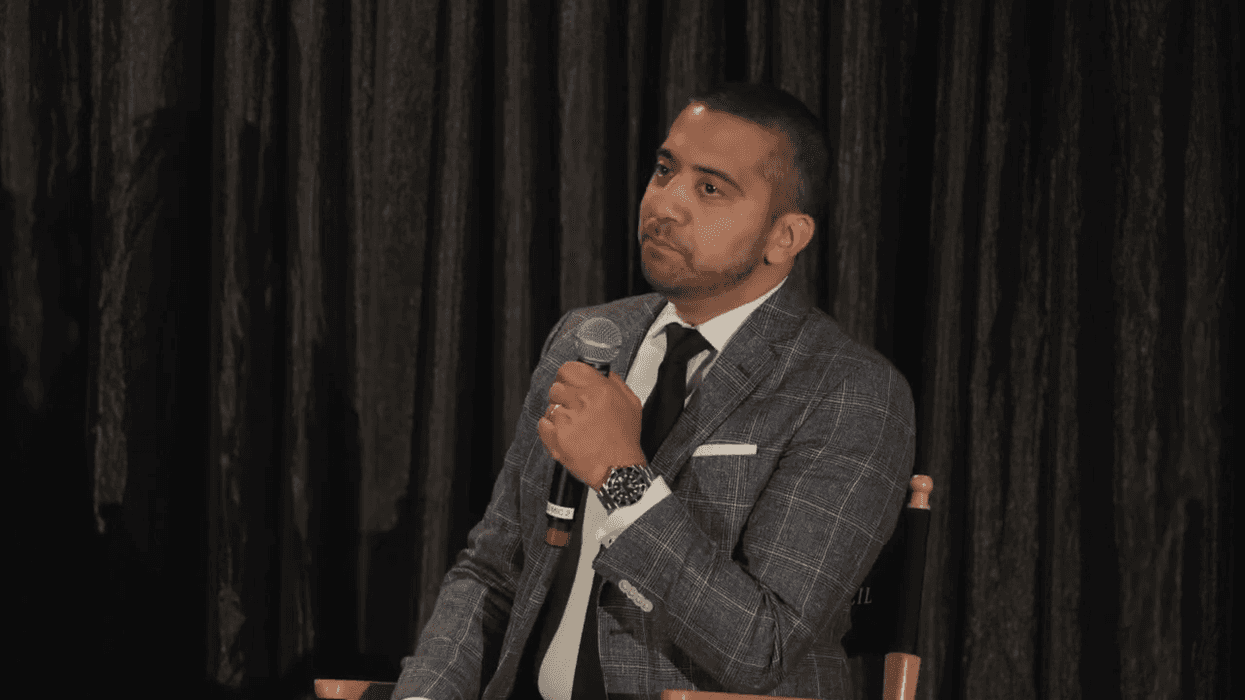
Two recent podcasts demonstrated what happens when establishment politicians, whose prepared talking points never stray from what serves as the conventional wisdom about Israel-Palestine, run up against interviewers unwilling to give them a pass.
Two July podcasts hosted by progressive media stars and featuring leading Democratic lawmakers brought home the deep disconnect that exists between the way establishment politicians and media operate and the way both come to speak about the Middle East and the realities that exist in that region.
Late last month, Mehdi Hasan hosted Sen. Mark Warner (D-Va.) on his podcast “Mehdi Unfiltered,“ while Congressman Adam Smith (D-Wash.) joined Krystal Ball on her program “Breaking Points.” Because Warner is the ranking Democratic member on the Senate Intelligence Committee and Smith is the top Democrat on the House Armed Services Committee, one might have expected more from them. The conversations were respectful, but neither of the lawmakers was prepared for the grilling they received from their respective hosts.
Both programs demonstrated what happens when establishment politicians, whose prepared talking points never stray from what serves as the conventional wisdom about Israel-Palestine, run up against interviewers unwilling to give them a pass. Two observations must be made: one is about the relationship that has come to exist between establishment politics and mainstream media; the other is how Israel-Palestine is playing out in the US.
One can see the incestuous relationship between political and media elites in full bloom at the annual White House correspondents’ dinner. President Donald Trump has painted the media as “the enemy” and purveyors of “fake news,” establishing an adversarial relationship with the mainstream media. He can afford to do so because for the last 30 years far-right Republicans have set up their own multi-platform alternative media. They have their own TV networks, newspapers, social media sites (including Trump’s own “Truth Social”).
The lesson that comes through so clearly in both interviews is the important role being played by new independent progressive media.
In Washington, most politicians (liberal Democrats and centrist Republicans alike) and the mainstream media figures who report on them work and live in close proximity to one another. Their homes are in the same neighborhoods; they send their children to the same schools, attend the same houses of worship, and socialize together. There’s also a “revolving door” factor, as some former government officials leave their posts to become highly paid TV hosts or commentators, and some journalists leave their positions to accept government appointments.
At the White House correspondents’ dinner, “celebrities” from both of these worlds mingle. They throw polite jabs at one another, but their respective jobs require them to use the occasion to be seen and make contacts. This fraternization causes some in the media to temper their coverage—especially as, in the competitive world of today’s media, if a journalist aggressively crosses the wrong officials or breaks from conventional wisdom on a controversial issue of some importance, they may end up losing access to the officials they cover or even losing their positions.
This problem is most pronounced when it comes to media coverage of the Middle East. There’s no doubt that public opinion regarding Israel-Palestine has changed, but this isn’t the case when it comes to the media and political elites. For evidence one can point to polling data, votes in Congress, the number of elections in which critics of Israel have won, and the hundreds of millions of dollars that pro-Israel groups have poured into both defeating what they call “anti-Israel radicals” and attempting to influence the public discourse. But these two shows revealed the impact of the changes in other ways.
For example, when senior political figures from either party appear on major network TV shows to discuss the Middle East, the conversations are usually constrained by the uninformed conventional wisdom shared by both politicians and their interviewers. This is the case for two reasons. First, almost no major network media figures know the history, culture, or politics of the Middle East. For most reporters, that region’s history began the day they got the assignment. Even those who have spent years reporting on the Middle East tend to view it through the conflicts they’ve been assigned to cover or briefings they’ve received from policymakers, who in turn generally have no direct knowledge of the people impacted by their policies. And the stable of experts the networks regularly invite as commentators are largely former government officials who have failed in the past, learned no lessons from their mistakes, and therefore continue to propagate the same views that have defined their sad careers.
It’s much the same when we look at the way lawmakers approach the Middle East. Most are either ignorant about the region or its history or have “willed ignorance”—not wanting to know because the cliches of the conventional wisdom have served them well. Why make things complicated? “Israel is the only democracy in the Middle East,” “Israel is an ally that protects US interests,” or a variation on “Israel wants peace, but the Arabs only want to destroy Israel.”
Regardless of what other Middle East-related issues elected officials are discussing, cliches like these form the backdrop to their thinking. Accepted wisdom shared by politicians and media alike. So when Rep. Smith and Sen. Warner sat down with interviews with Ball and Hasan, they were clearly unprepared to be grilled on: how the US can continue to provide advanced military support to Israel when it uses this aid in violation of international law; whether millions of dollars from pro-Israel super-PACs are negatively impacting our elections; or whether Palestinians should be guaranteed equal rights in Israel-Palestine.
For example, when Krystal Ball pressed Rep. Smith on why he would support a provision that would provide for Israel to co-produce weapons with the US military, he immediately fell back on the very tired cliche that since 1948 Arabs have been trying to destroy Israel. She reminded him of the expulsion of Palestinians and asked if he believed in equal rights and whether that applied to Palestinians’ right to return, he felt compelled to answer in the negative. He did so arguing that if Palestinians had equal rights, then Arabs might become the majority, and Israel would no longer be an ethno-national state.
Smith might have gotten away with these answers on a major network news program, but Krystal Ball was unwilling to accept the false historical narrative that has become the conventional wisdom. As she challenged him, it became clear that Smith was uneasy. He was no longer given a pass allowing him to remain in his comfort zone.
Much the same occurred between Mehdi Hasan and Sen. Warner. When Hasan asked Warner whether he would agree that Israel had committed genocide in Gaza, he awkwardly sidestepped the question with a non sequitur saying that he wouldn’t use that term because he was concerned that it only served to fuel those who want to eliminate Israel by chanting “from the river to the sea!” Mehdi would have none of this nonsense and continued pressing the senator. Equally confounding were the senator’s convoluted evasions when he was asked whether he felt that campaign contributions from the American Israel Public Affairs Committee played a negative role in US politics.
Some evidence of the changing public mood on Israel did come through in both interviews since both lawmakers indicated that they were feeling enough public pressure forcing them to oppose some of the proposed Israeli military aid packages included in the new budget, but then displayed their lack of understanding by falling back on the “new conventional wisdom” of saying that they were doing so only because Israeli Prime Minister Benjamin Netanyahu was the problem and they didn’t want to reward him.
The lesson that comes through so clearly in both interviews is the important role being played by new independent progressive media. They know the issues they cover, their questions aren’t scripted, and they are not afraid to challenge elites.
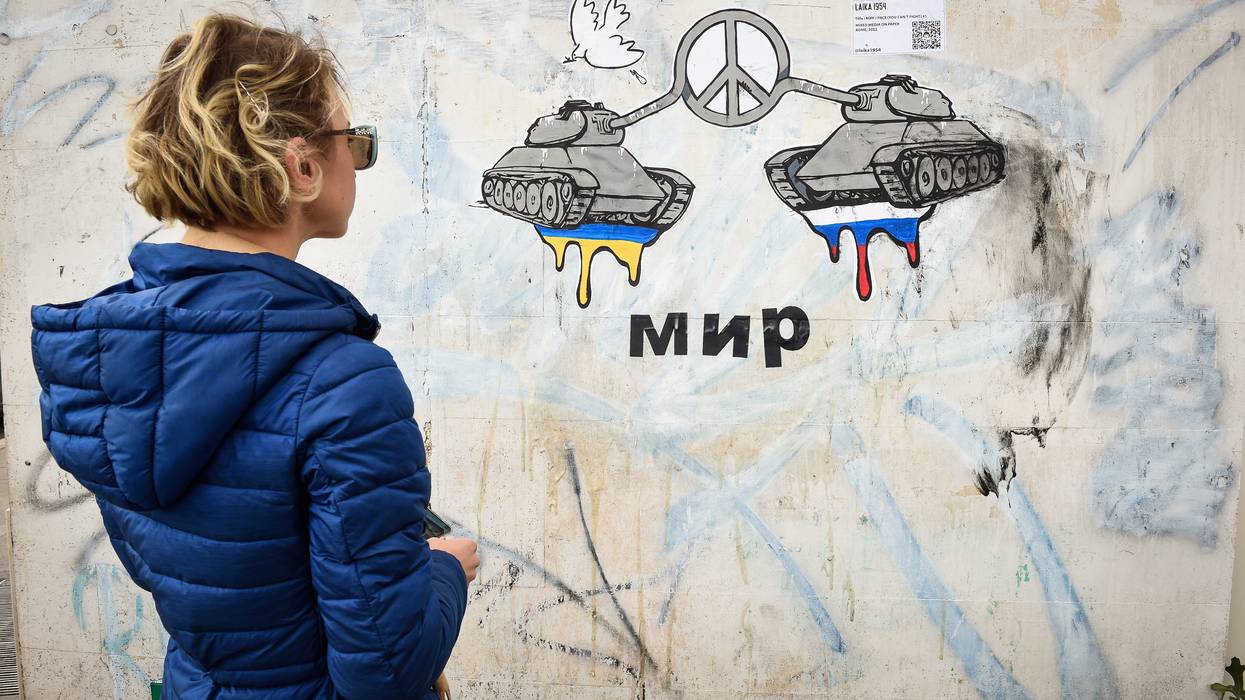
To sum up, we are returning to support the Memorandum of Understanding with Iran, ending our support for the war in Ukraine and for military aid to Israel while it attacks Palestinians.
Almost 60 years ago, in his book Vietnam: The Logic of Withdrawal, historian Howard Zinn wrote a speech for Lyndon Johnson in which the then president announced a withdrawal and the end of the US attempt to control Vietnam. Unfortunately, Johnson did not embrace Zinn’s sensible approach. Instead, he announced the end of his reelection bid, and the US war effort continued for another six years, with the signing of the Paris Peace Agreement, or eight years, with the ending of the war and the reunification of Vietnam.
President Donald Trump is at least as concerned as Johnson about not looking like a loser. So, my effort to compose a speech for Trump certainly seems like a quixotic effort. Many of my comrades in the struggle for peace and equality aghast at Trump’s attacks on democracy might question any effort to do anything related to Trump other than protest and try to drive him from office. I, too, am so inclined, but the loss of life in the Ukraine and Iran wars, the genocide of Palestinians, and the danger of escalation to nuclear war are too great to not try.
Here is the speech I think Trump should deliver.
Dear America,
During the 2024 campaign, I often declared, “I will settle Russia-Ukraine while I’m president-elect.” Although I later said that I’d been joking, I really expected I could do it. Some might say I have a short attention span and an exaggerated sense of my own abilities. That may be true. I believe it’s important to always put on an appearance of strength.
In my second Inaugural address, I promised, “We will move with purpose and speed to bring back hope, prosperity, safety, and peace for citizens of every race, religion, color, and creed.’” I also said, "My proudest legacy will be that of a peacemaker and unifier.”
The most prominent realist scholar, John Mearsheimer, expected me to follow through on these initial inclinations and be a peace president. Mearsheimer credited me with being different from most foreign policy makers. Less than two weeks into my second term, he said, “Trump is not a war monger... Trump is not interested in fighting wars.”
I had one significant peace achievement at the beginning of my presidency. I forced Israel to agree to a ceasefire in Gaza. I even persuaded the United Nations to support the establishment of a Board of Peace for Gaza with me in charge. I admit that no golden age of peace and prosperity has arrived for either the Palestinians or the Israelis. My idea that the Palestinians should leave Gaza was a nonstarter, and I stopped paying attention.
My worst mistake was getting sucked in by Israeli Prime Minister Benjamin Netanyahu to attacking Iran. It didn’t work when we did it last year in the 12-day-long Operation Midnight Hammer. This year’s attack, Operation Epic Fury, has failed to achieve the regime change we sought. Equally unfortunate from our point of view is that Iran is more likely to seek nuclear weapons today than it was before the war.
With Operation Epic Fury, I was able to claim a victory with the signing of the Memorandum of Understanding. I should not have listened to the naysayers and stayed with it. It’s time to return to that memorandum and to end our 47-year-old conflict with Iran. Changes in Iran toward more freedoms will be up to the Iranian people.
The conflict between Russia and Ukraine has also gone on too long. Although I wasn’t able to end it before taking office or in the days that followed, I believe it is time to recognize the reality that our expansion of NATO eastward, overthrow of the neutral Ukrainian government in 2014, the plan to bring Ukraine into NATO, and the arming of Ukraine were the causes of Russia’s attack on Ukraine.
Many have called the Russia-Ukraine war a proxy war by the US and its European allies against Russia. The commitment of European allies to join us in trying to weaken Russia is one reason it hasn’t been easy for me to negotiate an end to the conflict. I had a cordial discussion with Russian President Vladimir Putin in Alaska, but a solution evaded me. I’ve gone back and forth between tamping down and escalating our participation, all to no avail. It’s time to bring that conflict to an end.
There appear to be two options. Both involve recognizing the reality—often denied by both government spokespeople and the mainstream media—that Russia is winning. We don’t like it, but prolonging the conflict just means more deaths on both sides, especially of Ukrainians.
Option one is to agree to an armistice like the one that ended the Korean War. That means a frozen conflict along the final battle lines when both sides—the US, Europeans, and Ukrainians on one side and the Russians on the other—are ready to say enough.
Option two is to negotiate an agreement that recognizes Russian territorial gains and permanent Ukrainian neutrality.
My fellow Americans, please write me to give me your opinion of which of these two options you prefer. I must tell you that, while option two may sound more sensible and peace minded, the opposition to it will be immense from important sectors of both of our major political parties and from our NATO partners and from the Ukrainians. Those realities are why I’ve made so little progress thus far in ending that conflict.
In any case, it’s time to end the back-and-forth policy and to stick to ending our participation.
We come to the most difficult but also the most important choice we must make. I haven’t paid much attention to the Palestinians. My Board of Peace has accomplished little. The United Nations supported my initiative despite my negative views about that body. We should reciprocate by supporting UN rulings on Palestinian rights. We will no longer vote against UN resolutions in the General Assembly nor veto Security Council resolutions.
We shall advise Israel that we will no longer provide military assistance to it while it is killing Palestinians and occupying Palestinian land.
To sum up, we are returning to support the Memorandum of Understanding with Iran, ending our support for the war in Ukraine and for military aid to Israel while it attacks Palestinians, and working with the United Nations to secure Palestinian rights and peace in the region.
My fellow Americans, I have spoken frankly to you tonight. Whether you are a Republican, a Democrat, or an independent, I ask for your support in helping me to put our country and the world on a path toward peace. Thank you. God bless you, and God bless America.
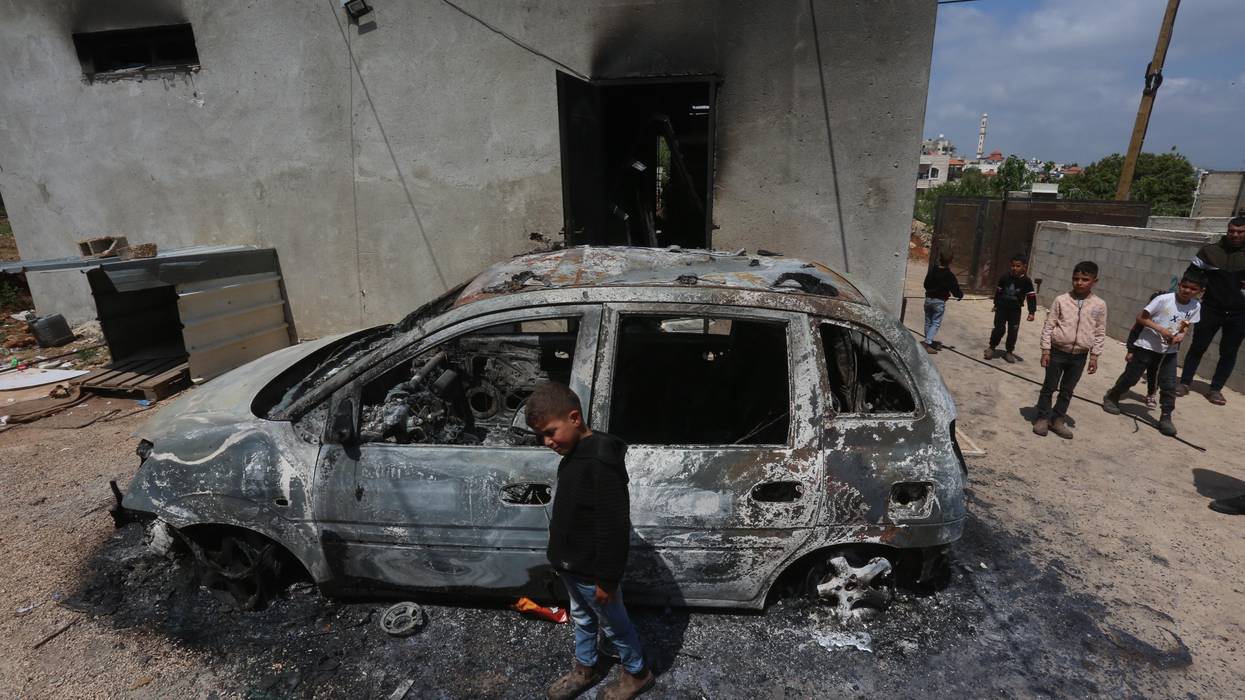
If an American participates in organized violence against civilians abroad, that person should be investigated. If evidence supports it, they should be prosecuted under applicable US law.
In a rare quiet moment inside the resuscitation room at Nasser Hospital in Gaza, I stood beside a young Palestinian man helping us treat waves of wounded children. He worked with calm precision. Focused. Unflinching.
Then he told me about his brother. Beaten nearly to death by Israeli settlers in the West Bank. Not once. Repeatedly. Ribs broken. Face shattered. The attacks ended only when his family fled the land they had farmed for generations.
“They wanted us gone,” he said. Some of the men who carry out this violence hold United States passports.
They live under American law. They vote in American elections. Then they travel abroad and take part in acts that, in any other context, would be recognized without hesitation: assault, arson, organized racial violence. Homes burned. Crops destroyed. Families driven off land.
An American who beats a man because of his ethnicity, drives him from his home, and destroys the means by which his family survives is not transformed into something else by crossing a border.
And then they return. They pass through US customs. They resume their lives. No charges. No investigation. No meaningful consequence.
This is not an abstraction. Human rights organizations, Israeli and international alike, have documented repeated incidents of settler violence in the West Bank: physical attacks on civilians, destruction of agricultural land, the burning of homes and olive groves, often carried out with little immediate accountability.
Some of those involved are Americans. Under US law, citizenship is extraordinarily difficult to revoke. The Supreme Court has made that clear. But citizenship is not the only instrument of accountability, and treating it as such allows something far worse to persist: impunity.
If an American participates in organized violence against civilians abroad, that person should be investigated. If evidence supports it, they should be prosecuted under applicable US law. If their actions meet the threshold of coordinated or systematic violence, then sanctions, asset restrictions, and limits on international travel should follow.
A passport should not function as a safe harbor.
In 2024, the United States took limited steps to sanction individuals and entities linked to settler violence. It was an acknowledgment, however modest, that this problem exists. In early 2025, that framework was dismantled.
The message was clear. Even minimal accountability was negotiable.
Meanwhile, the violence continues. This is where the question becomes unavoidable.
What does it mean for Israel, a country that defines itself as a democracy under law, to tolerate or fail to prevent organized violence by settlers against civilians in the West Bank?
And what does it mean for the United States to allow its own citizens to participate in that violence and return home untouched?
These are not separate questions. They are reflections of the same failure.
An American who beats a man because of his ethnicity, drives him from his home, and destroys the means by which his family survives is not transformed into something else by crossing a border. Geography does not dilute the crime. It only obscures it.
If that same act occurred in the United States, there would be no ambiguity in how it is described or prosecuted.
When it occurs in the West Bank as part of a broader pattern of displacement, it demands the same clarity.
The tools for accountability already exist. Federal statutes governing violent crime, conspiracy, and, in certain cases, war crimes. Sanctions authorities. Civil liability. Immigration and travel restrictions.
What is missing is not law. It is willingness.
Impunity is not an accident here. It is a decision, made repeatedly, on both sides of the ocean.
The man I met in Gaza was not asking for revenge. He was asking for the violence to stop. He was asking for a form of justice that does not end at a checkpoint or a border crossing.
A United States passport should carry weight. It should represent a commitment to law, not an escape from it.
Right now, in too many cases, it does the opposite. And everyone involved knows it.
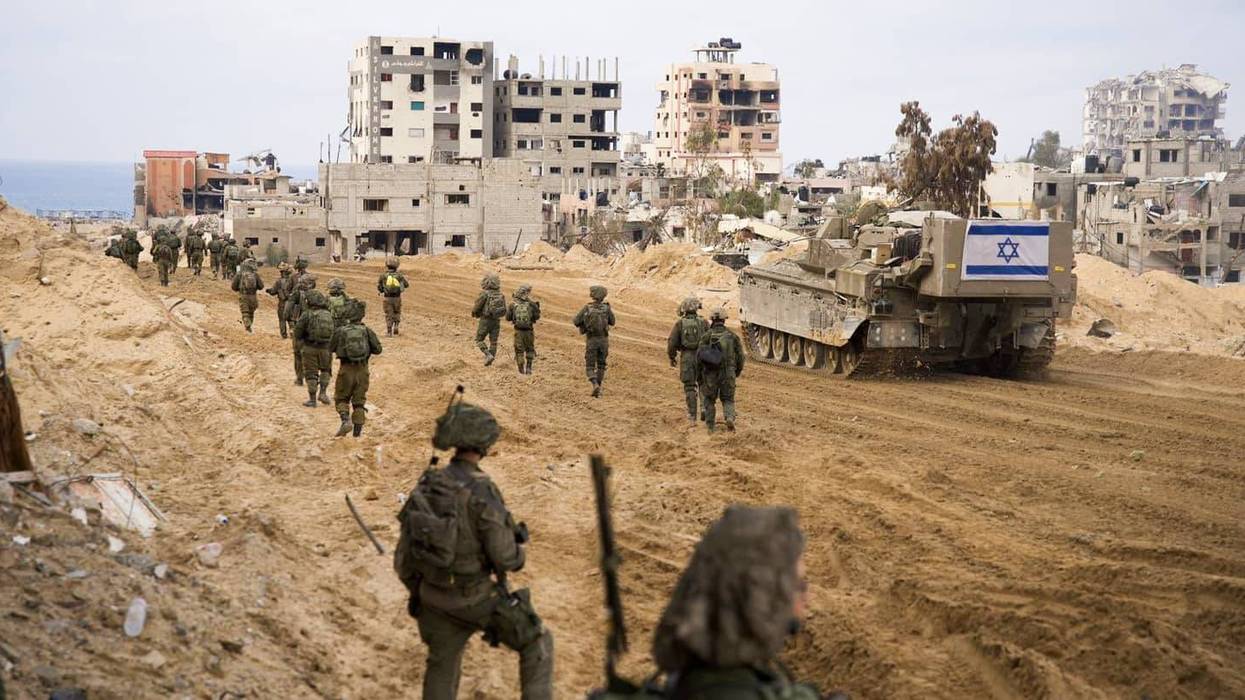
Until Israel is compelled to relinquish its military control over Gaza, everything else you see or are told will be nothing but political theater.
Here is the bottom line: Israeli Prime Minister Benjamin Netanyahu has no intention of leaving Gaza, either before Israel’s general elections—likely to be held in October—or after. Conceding an inch from the roughly 70 percent of the territory his army currently occupies in Gaza will be considered a weakness by the majority of Israeli voters and would result in an open revolt within his extremist coalition.
He has made his intentions clear time and again. Recent statements by Israel's political leadership have only reinforced that reality, with officials insisting that Israel must maintain indefinite military dominance over the Strip and explicitly rejecting any framework that requires a full withdrawal of troops. To Netanyahu, the military footprint in Gaza is a permanent fixture, not a temporary bargaining chip.
Some may argue that Netanyahu’s statements are merely political fodder aimed at prolonging his career and avoiding the disastrous outcomes awaiting him—in terms of state investigations and court trials—should he be ejected from power. However, his extremist policies throughout his entire career at the helm of Israeli politics say otherwise. There has never been a period in Netanyahu’s history in which he showed a genuine willingness to compromise or engage in an authentic political process with the Palestinians.
The political track aimed at reconstructing Gaza and ending the Israeli military presence has little bearing on the grim realities unfolding on the ground.
This reduces the point of the Washington-led Board of Peace and its subsequent administrative bodies to near irrelevance. These entities—including the National Committee for the Administration of Gaza (NCAG) and a multinational International Stabilization Force (ISF)—were supposedly assembled with the sole aim of managing a transitional phase, delivering humanitarian aid, and deploying a peacekeeping buffer to facilitate a gradual Israeli military withdrawal.
It seems that two separate, irreconcilable tracks are taking shape. One is the Israeli track of continued war, entrenched military occupation, and prolonged genocide. The other is an international track, controlled firmly by Washington, aimed largely at finding alternative ways to manage Gaza on behalf of Israel.
Yet even with its obvious limitations, the Gaza plan’s first phase theoretically promises a phased Israeli military repositioning, a sustainable ceasefire, a massive influx of reconstruction aid, and the gradual handover of civil administration to a non-factional Palestinian authority.
Little of that has actually been delivered. While the United States and international envoys claim the ceasefire hinges on disarmament, Israel has used the diplomatic deadlock to advance its troops further into the Strip rather than withdrawing them. Aid remains choked at the borders, and the promised reconstruction has not even begun.
Indirect talks are ongoing in Cairo, though it seems that only Palestinians are being held accountable or expected to carry out heavy concessions. Moreover, after 19 years of Hamas governing Gaza, the movement announced on July 6 that it has officially dissolved the Emergency Committee that has been administering the Strip. The movement declared its full readiness to transfer governance to the National Committee, intended to administer Gaza under the framework of the US-brokered plan.
On paper, this suggests that a political transition is finally underway. In reality, no such transition is taking place.
Israel is actively preventing this technocratic government from assuming any real duties. Rather than facilitating a civil handover, the Israeli political security cabinet has completely dismissed the transition. Israeli Foreign Minister Gideon Sa’ar openly labeled the move a "trick," arguing that a technocratic administration would merely be responsible for municipal tasks like garbage collection while allowing resistance networks to persist.
Instead, Israel’s military strategy continues to fuel conditions that undermine any possibility of stabilizing the devastated Strip. Its objective is not merely to reject an alternative Palestinian administration, but to ensure that no functioning Palestinian governing authority can emerge at all. By doing so, Tel Aviv wants to create a permanent governance vacuum, sowing further chaos and fragmentation.
If no alternative Palestinian political body is permitted to stabilize Gaza, the default collapse will inevitably force local factions to reassert control over daily survival, thus giving Israel yet more pretenses to exact more punishment on a helpless population.
Following the Hamas political move, Israel simply responded with its standard currency: immediate violence. This was starkly illustrated on July 9, when Israeli forces carried out a targeted airstrike on a vehicle in Gaza City in a failed attempt to assassinate Hamas spokesman Hazem Qassem. Though the assassination attempt failed, the strike sent a clear message that Israel has no intention of respecting political transformations or ceasefires.
While no houses are being built, no schools are being constructed, and no hospitals are being revived, the only numbers that keep growing are those of the dead and wounded. The human cost has reached unfathomable proportions: the Palestinian death toll in Gaza has surpassed 73,000, with the number of wounded exceeding 173,200. Tragically, these numbers continue to climb daily: over 1,098 Palestinians have been killed since the so-called ceasefire framework was initially agreed upon, proving that the truce exists only in media rhetoric, not on the ground.
This leaves us with a single, inescapable conclusion: the political track aimed at reconstructing Gaza and ending the Israeli military presence has little bearing on the grim realities unfolding on the ground.
The only way out is a stronger, independent international will that wrestles the future of Gaza from the grip of Netanyahu, translating political agreements into immediate humanitarian outcomes and a definitive end to the Israeli occupation.
Until Israel is compelled to relinquish its military control over Gaza, every new committee, reconstruction mechanism, or diplomatic initiative risks becoming little more than political theater.
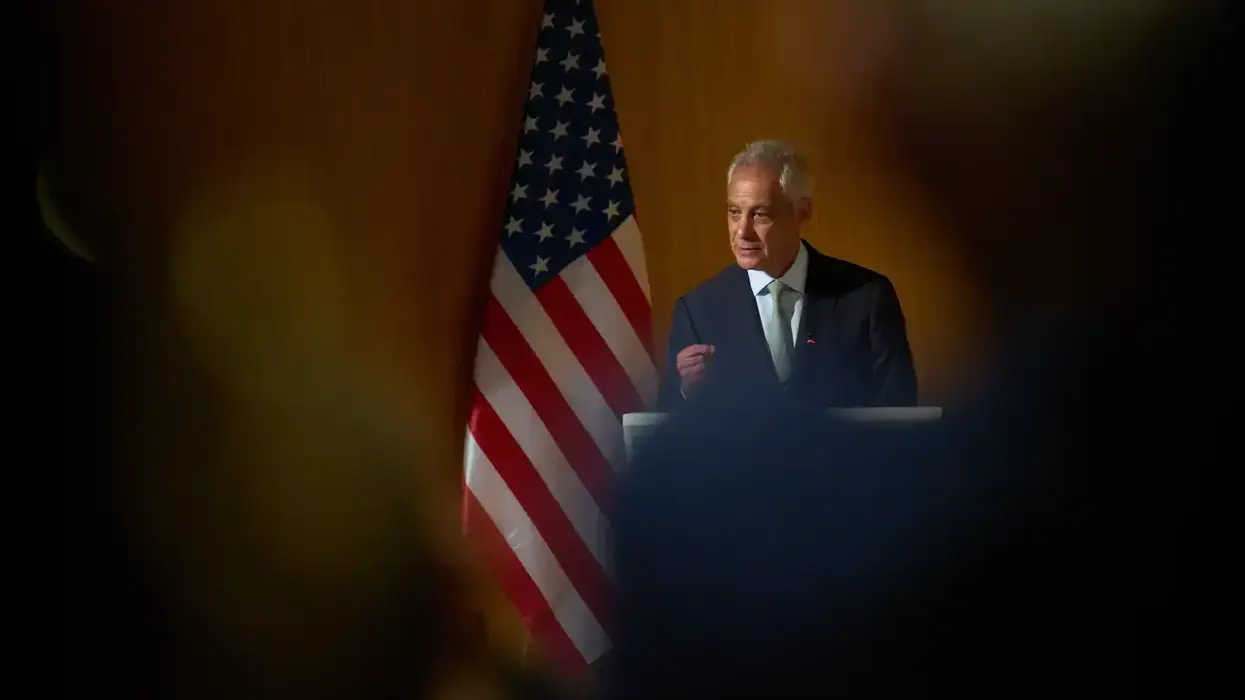
Instead of being a “groundbreaking” speech that changes the US debate over Israel, Emanuel’s speech only serves to define what has emerged as the new conventional wisdom: Netanyahu is bad. But that's not nearly enough.
Several observations can be made regarding Rahm Emanuel’s recent speech at Tel Aviv University: what he said and didn’t say, and what impact (if any) his words might have.
For the past 35 years, Emanuel has been a fixture in US politics. After a short stint as a volunteer with the Israeli Defense Forces in 1991, he returned to the US to work on Bill Clinton’s presidential campaign, then joined the White House staff in 1993. He went on to serve three terms in Congress, leaving to serve as President Obama’s Chief of Staff. Emanuel then ran and won two terms as mayor of Chicago. Finally, in 2021 he was appointed by President Biden as US Ambassador to Japan.
With such an expansive resume, it’s not surprising that Emanuel would consider running for president. At the same time, given the dramatic shifts in Democratic voters’ attitudes toward Israel and Emanuel’s long history of support for Israel (e.g., his father was born there, his uncle served in the terror group, Irgun, and he volunteered with the IDF during the first Gulf War), questions were immediately raised as to how he would navigate these turbulent waters in a presidential primary.
The way out of this bind for Emanuel was to heed the maxim: “Shine a light on your problem.” Instead of ignoring Israel and how out of sync he might be with the majority of Democrats, Emanuel decided to go Tel Aviv to deliver a major speech that laying out his bona fides as a long-time supporter of Israel, while delivering a sharp rebuke to that government’s policies.
It was, however, a strange hodgepodge of a speech. After noting his family ties with Israel, Emanuel launched into the Israeli historical narrative of the post-Oslo period, echoing the well-worn “Palestinians never miss an opportunity to miss an opportunity.” As a member of the Clinton team, he appears comfortable repeating their false claims that Palestinians turned down “the best deals ever” offered by former Prime Ministers Rabin, Barak, and Olmert and then unleashed violence against innocent Israelis. While this fabrication served the Clintons’ electoral purposes, it doesn’t jibe with what actually happened.
I was in the Occupied Territories in the ‘90s working on a project created by the Clinton administration, and saw firsthand how the Israeli government was expanding settlements, blocking Palestinian economic development, and establishing cruel and humiliating restrictions on Palestinian movement and employment. After the first few years of Oslo, Palestinians were poorer, less free to move about, had less control of land, and were losing hope in peace. As a result, Palestinian support for their leaders who had signed agreements with Israel was collapsing and support for rejectionists was on the rise. And so, it’s true that Hamas used terror against innocent Israelis in order to sabotage Oslo and discredit the Palestinian Authority. Instead of strengthening peace, the Israeli government sidelined the PA, treated all Palestinians as guilty, and in the process created more anger. Because the Clinton administration did nothing to challenge Israel’s role in sabotaging Oslo, it is inexcusable for Emanuel to blame Palestinians and absolve Israel.
As for Barak’s offer, Palestinians never rejected it. They continued to negotiate with Israel at Taba until Barak, facing electoral defeat, ended the negotiations leaving Palestinians in the lurch. Olmert’s offer of 98% was indeed enticing, but—as he was facing imminent removal from office and a prison term—his “offer” was dismissed by Palestinians as not serious.
From here, Emanuel launches into a full-throated criticism of Israel’s recent policies in the Occupied Territories which he laments have made the country a “territorial pariah” in the world. It is hard to argue with his cataloguing of the horrors Israel has visited upon Palestinians or with his assessment that the US’s coddling of Israel with unconditional support has contributed to the sense of impunity that has fueled Israel’s inhumane behaviors. Even more interesting is Emanuel’s embrace of the threat of applying sanctions not only to settlers who violate Palestinian rights, but also to government ministers, banks, and contractors as well.
While Emanuel’s criticisms are harsher than those of his fellow mainstream Democrats, instead of seeing the problem as systemic, he focuses blame on Benjamin Netanyahu. In fact, much of the speech sounds like a plea to Israelis to see how Netanyahu’s policies have damaged their reputation in the world. It was less a US campaign speech than a plea to Israelis to rid themselves of the leader who has damaged their international standing.
But ridding themselves of Netanyahu isn’t enough, as those who are running against him do not oppose his overall approach to Palestinians. That will not change until the US takes measures to punish Israel’s bad behaviors. Threats won’t do it. Only by shocking the Israeli polity with punitive sanctions will a new Israeli leadership emerge that is willing to both abandon their fantasy of Greater Israel and embrace Palestinian humanity.
Instead of taking this direct approach, Emanuel sidesteps it, embracing what is an equally dangerous fantasy of a broad regional peace between Israel and the 21 Arab states as the way forward. In this liberal Zionist vision, the Arabs, instead of exploiting Palestinian suffering for their own ends, would be assigned the responsibility of getting the Palestinians to stop rewarding those who kill Israelis and to stop teaching hatred of Israel. In this fantasy world, Israel would become the center of global trade between East and West and once again admired for its genius and accomplishments.
As compelling as this vision might be to liberal Zionists in Israel and the US, it fails to address existing realities. Instead of turning the corner by first imposing restraints on Israel, the burden is placed on Palestinians. Emanuel falls silent on what will be done: to compensate Palestinians for their losses of lands, homes, and lives; to rein in the Israeli military and border police in the occupied lands, Lebanon, and Syria, or the out-of-control settler movement that is rampaging and terrorizing Palestinians; to force the Israeli government to free the thousands of Palestinians hostages detained for years without charges or trials, and take down the abusive checkpoints, remove the hundreds of thousands of settlers living on stolen lands, free up the Palestinian tax monies they collect (which by treaty should turned over to the PA), and end the impediments to economic development that have impoverished Palestinians for decades. About all of these steps, Emanuel says nothing.
In the end, instead of being a “groundbreaking” speech that changes the US debate over Israel, Emanuel’s speech only serves to define what has emerged as the new conventional wisdom: Netanyahu is bad, the US shouldn’t be paying for Israel’s misbehavior, and if only the Arabs would step in and control the Palestinians and make peace with Israel all would be well. This is, as we say, “nice, but no cigar.”